About HHEI
Many lenses, one room.
HHEI was built by women who hold this work from inside it: clinicians across primary care, occupational health, and secondary care; cross-cultural and bilingual; with founders who carry lived patient experience as well as clinical training. That plurality is what we then bring into rooms with employers, communities, public health teams, funders, NHS commissioners, and peer clinicians.
Why HHEI was founded
HHEI was founded by women who have experienced the gaps in hormonal health provision firsthand: as clinicians, and many of us as patients navigating these conditions across cultures where they were barely acknowledged.
Hormonal health conditions intersect with mental health, working life, social circumstances, and cultural background in ways that benefit from a multi-disciplinary response. For ethnic minority communities, the barriers compound: later diagnosis, less research representation, less culturally informed care. The complexity is structural, and HHEI was built to work alongside the disciplines and organisations already addressing it.
The founding wasn't institutional. It was personal, and collaborative from day one.
HHEI was built to bring frontline clinical experience, cross-discipline lenses, and cross-cultural expert-by-experience insight alongside the expertise already at work, NHS teams, OH providers, employer functions, academic researchers, community organisations, peer clinicians. We hold one lens among many. The work moves when those lenses meet.
The CIC structure was chosen for that reason. Asset-locked by law, not-for-profit by design, so we can collaborate freely with our partners, contribute without duplicating, and remain accountable to the communities the work is for.
HHEI works through four layers: a Founding Board of two clinician-directors, an Expert Panel of multi-lens specialists drawn into commissions, an Advisory Board providing strategic counsel on growth and operations, and an open Community of clinicians, employers, and members of the public who follow the work.
The scale of the gap
Hormonal health inequalities affect people across all genders and all ethnic backgrounds. The figures below include women's health data and emerging evidence on men's hormonal conditions in ethnic minority communities.
73.7%
English women aged 16–55 with at least one indicator of poor hormonal health (n=59,332, DHSC-commissioned)
Palmer et al., BJOG, March 2025
9 yrs
Average UK endometriosis diagnostic delay
Endometriosis UK Survey, 2023
~2%
Public research funding dedicated to hormonal health
Women's Health Strategy for England, 2022
~2x
Higher coronary heart disease risk in South Asian men compared with White European men. A pattern seen across UK ethnic minority groups with heritable cardiometabolic risk
BHF / LOLIPOP Study (Fuster et al.), 2024
8.2 yrs
Earlier onset of type 2 diabetes in South Asian men compared with White European men, at a lower BMI threshold. Testosterone, insulin resistance and visceral fat interact at a population level under-recognised in standard clinical thresholds
Nature Medicine (Emerging Risk Factors Collaboration, n=1.1m), 2024
1 in 4
Lifetime prostate cancer risk for Black men in the UK, compared with 1 in 8 for the general population. An androgen-pathway condition that is under-screened and under-discussed across all ethnic communities
Cancer Research UK, 2024
Founding Board
The people behind HHEI
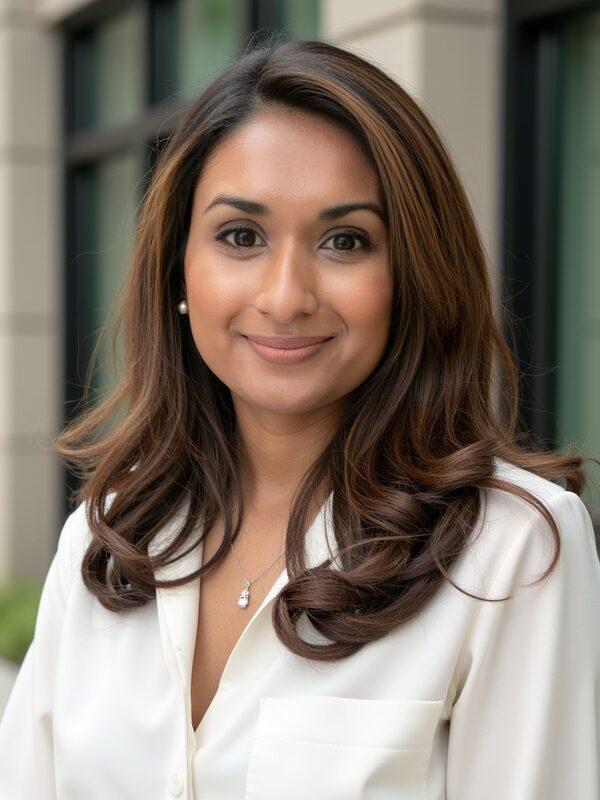
Founding Director
Dr Divpreet Sacha
A GP working in preventative health whose clinical training spans primary care, occupational medicine, and the intersection of hormonal health and working life. Her Diploma in Occupational Medicine gives her the clinical framework to see what most clinicians are not trained to see: the point where a person's hormonal health and their working life collide, and where no integrated clinical infrastructure currently exists.
HHEI was founded from her recognition that the fragmentation is not inevitable, it is structural. As a South Asian woman who has navigated IVF and PCOS from inside the system she works in, she built HHEI to do what the system cannot: hold the clinical, occupational, cultural, and equity lenses simultaneously.
Diplomate Representative, West Midlands Society of Occupational Medicine · Published in BMJ
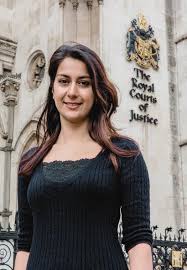
Founding Director
Dr Nadia Masood
A consultant anaesthetist by training who retrained in occupational medicine, gaining the AFOM, specifically to reach people before the crisis: advising employers on adjustments, fitness for work, and the management of complex health conditions alongside a career. She now also works at Elsevier as a clinical expert in generative AI evaluation, and is a technical member of the Chartered Institute of Ergonomics and Human Factors, which brings a health-technology and human-factors lens to the founding board.
Alongside Divpreet, she brings a second occupational medicine perspective to the founding board, reinforcing HHEI's ability to hold the clinical and workplace lenses together. Her trajectory, from acute medicine to workplace health, is precisely the bridge HHEI was built to be. She is a South Asian woman with her own fertility journey. The gap this board was built to close is not theoretical to her.
Anaesthetist · Occupational Medicine (AFOM) · Clinical Expert, GenAI Evaluation, Elsevier
Why we chose this structure
Not-for-profit, by law
A CIC limited by guarantee. Income is reinvested. Asset lock provisions ensure remaining assets transfer to an aligned body, so we can collaborate freely with the people already doing the work.
Eligible for NHS commissioning
As a VCSE body, HHEI can be commissioned directly by NHS bodies and ICBs, a route designed for partners that integrate with existing pathways, not stand outside them.
Built to convene
Independent by structure, so we can work with clinicians, NHS teams, employers, funders, and community organisations, contributing one lens to work that needs many.
Clinical-safety expertise on the founding team
Our founding clinicians include a registered Clinical Safety Officer, contributing clinical-safety expertise into partner platforms and programmes, alongside the assurance frameworks partners hold.
"We are one lens. The work needs many. HHEI was built so those lenses meet."
Advisory Board
Strategic counsel for HHEI as a CIC
The Advisory Board provides strategic counsel on business, finance, operations, legal structure, and commercial growth. Members contribute their expertise on a voluntary basis, a model standard in mission-driven social enterprise governance, and a reflection of belief in the work.
It is distinct from the Expert Panel, which is paid and contributes workplace, occupational, and expert-experience input to specific commissioned pieces of work for partners and commissioners.
We are building this group now. If you have senior experience in social enterprise growth, healthcare commercialisation, finance, legal, or operations, and would like to contribute to the work, we would welcome an introduction.
Recommendations and expressions of interest via our contact page.
For our legal structure, asset lock, conflict of interest protocol, and CIC reporting, see governance and transparency.
Learn more or work with us
Book a partnership call to talk through how the multi-lens approach fits your context, or join the community for briefings, evidence and event invitations.
Or join the community for briefings and event invitations.